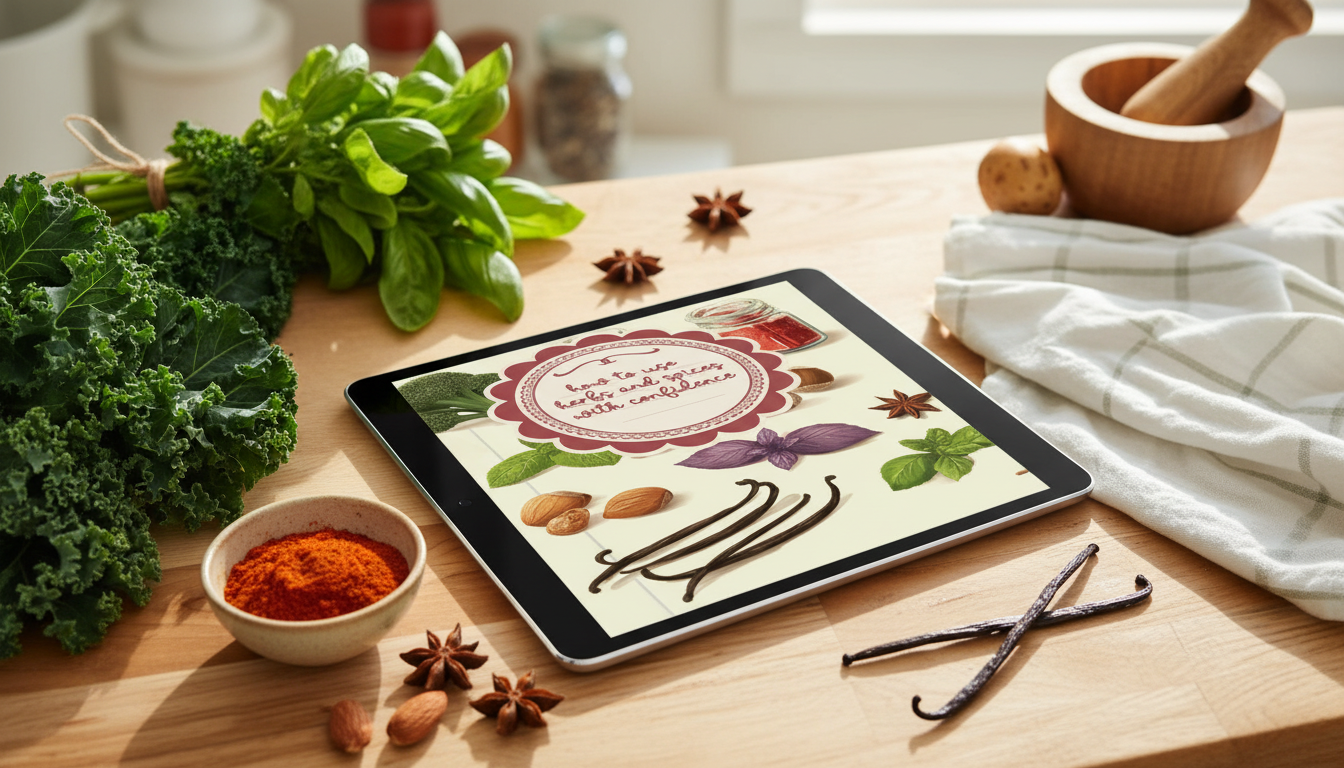
Confident seasoning is less about memorizing rules and more about learning a few reliable patterns: how herbs differ from spices, when to add each, and how to balance salt, acid, fat, and heat. Once those basics click, you can make quick, delicious choices with whatever is already in the pantry—and even use AI to generate smart variations without losing control of flavor.
Herbs come from leafy parts of plants, so they tend to taste fresher, greener, and more delicate. Spices come from seeds, bark, roots, or fruit, which usually makes them warmer, more concentrated, and longer-lasting.
To keep seasoning simple, think of four flavor “dials” you can turn up or down:
A practical goal: season in layers. Small additions at multiple stages beat one heavy dose at the end.
Use aroma as feedback while you cook. If it smells flat, bloom spices in fat. If it smells sharp, add fat or a touch of sweetness. If it smells muted, add acid near the end.
| Ingredient type | Typical character | Best timing | Common beginner mistake |
|---|---|---|---|
| Delicate herbs (basil, cilantro, dill) | Fresh, grassy, bright | Add near the end or off heat | Cooking too long so flavor disappears |
| Hardy herbs (rosemary, thyme, oregano) | Resinous, savory, sturdy | Add earlier to infuse | Using too much without balancing with acid |
| Ground spices (cumin, paprika, turmeric) | Fast flavor release, concentrated | Briefly bloom in oil or add to simmer | Dumping into water-based dishes without blooming |
| Whole spices (peppercorn, cumin seed, cinnamon stick) | Cleaner, slower infusion | Toast/bloom first; remove if desired | Using old, stale spices and expecting strong flavor |
When a dish is missing something, it usually needs a clear “direction” more than it needs more ingredients.
Rescue moves: Too salty → add unsalted liquid, starch, or more main ingredient. Too spicy → add dairy/fat and a little sweetness. Too bitter → add a pinch of salt, a touch of acid, or sweetness. Too bland → add salt first, then acid, then a bit more spice.
If you’re building a quick weeknight meal, a small but reliable upgrade is using fresh citrus zest. A sharp, comfortable tool like the Multifunctional Stainless Steel Vegetable & Fruit Peeler makes fast work of lemon zest ribbons and thin garlic slices for finishing.
These are steady combinations that work across common cooking methods (roast, sauté, simmer, air fry). Start modest, then adjust with the flavor dials.
For hands-off cooking, an air fryer makes it easy to test these blends on vegetables and proteins with consistent browning. The Revolutionary 6.5L High-Capacity Smoke-Free Air Fryer: Healthier Cooking at Your Fingertips is a simple way to practice seasoning in repeatable batches (same time/temp, different spice blends).
Spices lose aroma fastest when they’re exposed to heat, steam, and sunlight—so keep them sealed and away from the stove. For general food storage guidance, the USDA FoodKeeper App is a helpful reference.
If you want deeper background on how spices behave (aroma, compounds, and cooking effects), the McCormick Science Institute is a solid source.
For a structured, quick-reference format that keeps seasoning decisions consistent, How to Use Herbs and Spices with Confidence (digital guide) is an easy way to keep pairing ideas, timing tips, and variation templates in one place.
Make the routine feel like a treat: a small serving in a favorite cup helps slow down and notice flavor changes. The Japanese Ripple Glass Cup Mug is a simple, calming companion for tea or lemon water while you taste and adjust.
Add salt in small increments first, then a little acid (lemon or vinegar) to brighten. If it still feels flat, bloom a small amount of spice in oil and stir it in, then finish with fresh herbs or citrus zest.
No—dried herbs are more concentrated and usually work best earlier in cooking, while fresh herbs taste brighter when added near the end. Use less dried than fresh, then adjust after tasting.
Ask for a few focused blend options with exact amounts and timing, then pick one direction and adjust using salt/acid/fat/heat. Request a rescue plan specific to your dish so you know what to do if it turns out too salty, too spicy, or flat.









Leave a comment