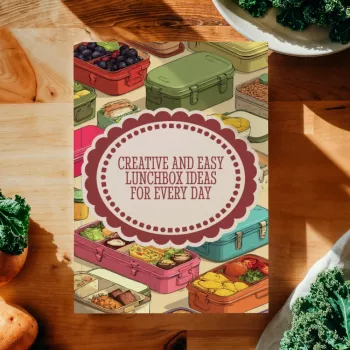
Daily lunch packing gets simpler when you stop trying to reinvent the wheel. A reliable mix-and-match system lets you build balanced lunches fast: pick a main, add produce, include a protein or healthy fat, and finish with one “fun” item for texture and excitement. To keep the routine fresh without adding stress, a printable checklist makes it easy to rotate options, plan ahead, and avoid the dreaded “we have nothing for lunch” morning.
For a balanced baseline, the USDA’s MyPlate guidance is a helpful reference point—especially when lunches start drifting toward all beige carbs and no produce.
When lunches feel repetitive, it’s usually not a lack of ideas—it’s too many choices at once. A four-part formula keeps decisions quick while still covering nutrition and satisfaction.
For variety across the week, rotate colors (red/orange/green/purple), textures (creamy + crunchy), and temperatures (cold + thermos-warm). Keep “repeatable” favorites and change one detail: the same wrap with a different spread, or the same yogurt with new toppings.
Portions matter: pack what actually gets eaten, and add an optional extra snack only on high-activity days. If you’re managing dietary needs, swap equivalents—gluten-free crackers, dairy-free yogurt, or nut-free spreads—without changing the overall structure.
A checklist turns lunch packing into a quick weekly selection instead of a daily brainstorm. The goal is to create a small, flexible “menu” you can rotate.
If you want an easy system you can print and reuse, the Creative and Easy Lunchbox Ideas for Every Day | Printable Lunchbox Ideas Checklist | Healthy & Fun Digital Download for Parents, Kids, and Busy Adults keeps categories organized so you can rotate options without repeating the same lunch five days in a row.
| Main | Fruit/Vegetable | Protein/Healthy Fat | Fun add-on |
|---|---|---|---|
| Chicken salad pita pocket | Cucumber coins + cherry tomatoes | Cheese stick | Ranch dip cup |
| Hummus & veggie wrap | Grapes | Roasted chickpeas | Pretzels |
| Pasta salad cup | Orange wedges | Greek yogurt | Chocolate-covered raisins (small) |
| Rice bowl (thermos) | Steamed broccoli florets | Edamame | Sesame crackers |
| DIY snack box | Apple slices | Sunflower seed butter | Popcorn |
For quick roasted chickpeas, crispy veggies, or batch-cooked proteins without a lot of hands-on time, a large-capacity air fryer can help streamline prep: Revolutionary 6.5L High-Capacity Smoke-Free Air Fryer: Healthier Cooking at Your Fingertips. To speed up produce prep (especially carrots, apples, and cucumbers), a sharp peeler is a small upgrade that saves time: Multifunctional Stainless Steel Vegetable & Fruit Peeler.
For more detail on keeping packed meals safe at school, work, and on the go, the CDC’s food safety basics are a reliable resource.
If you want a ready-to-print, mix-and-match system, grab the Printable Lunchbox Ideas Checklist (digital download) and keep lunch decisions simple all year.
Start with a balanced base (main + produce + protein), then keep the fun item small. Choose treats that still add something useful—like yogurt dip, popcorn, or fruit with a little chocolate—and rotate them so sugar doesn’t become an everyday default.
Good nut-free proteins include cheese, yogurt, eggs, beans and lentils, chicken or turkey, tuna/salmon pouches, edamame, sunflower seed butter, and roasted chickpeas. Pair them with easy carbs and produce (like crackers + cheese + grapes) to make the lunch more filling.
Many washed produce items last about 3–5 days, cooked proteins are often best within 3–4 days, cut fruit is usually 1–3 days, and dips often hold 3–5 days when refrigerated. Use airtight containers, keep items cold, and discard anything that smells or looks off.








Leave a comment