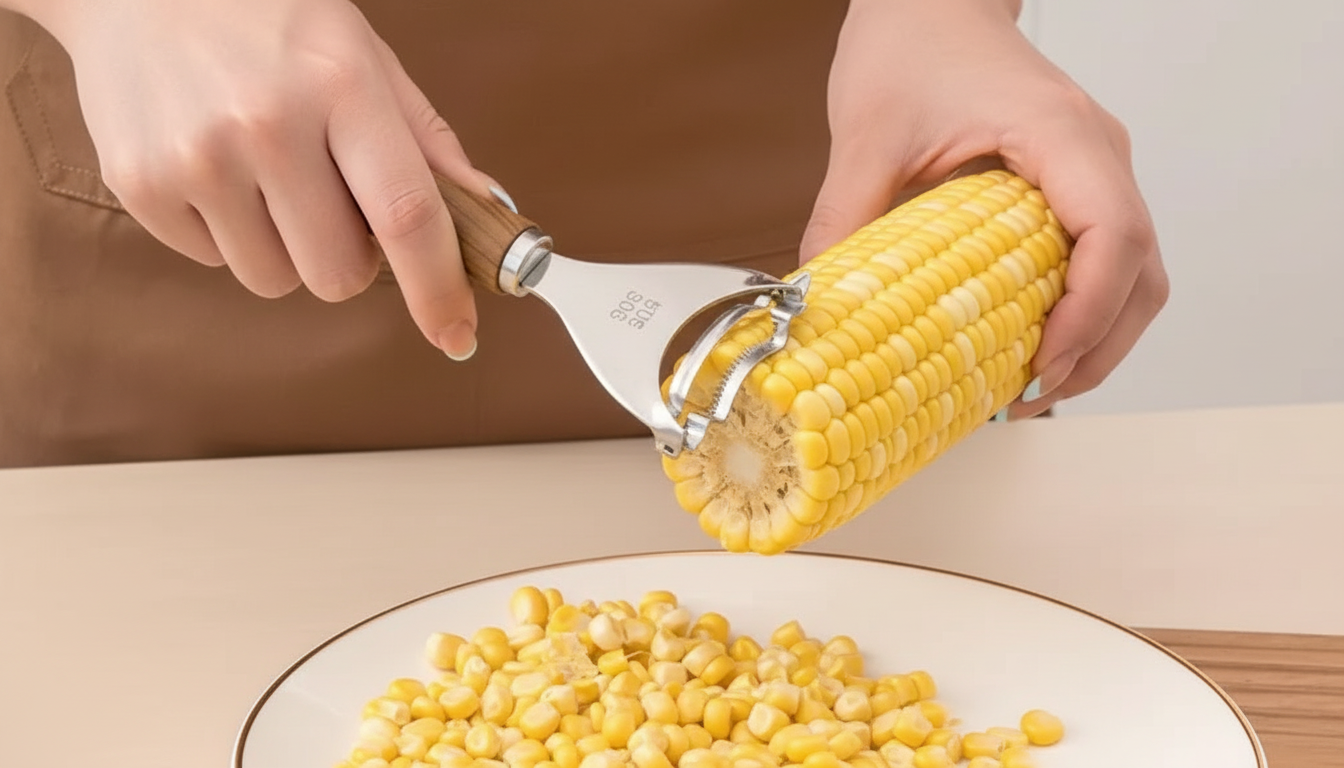
Steel cut corn is dried corn that’s been chopped into small, coarse pieces using steel blades rather than being finely ground into cornmeal or cracked into large chunks. The result is a hearty, grits-like product with a more rustic texture and a slightly nuttier corn flavor than finer milled options. Because the particles are larger and more uniform, steel cut corn tends to cook up with distinct, toothsome bits instead of turning creamy or pasty.
The biggest difference is the cut size and how it affects cooking. Cornmeal is finely ground, which helps it thicken quickly and bake smoothly (think cornbread). Traditional grits can range from fairly fine to coarse, depending on how they’re milled. Steel cut corn usually lands on the coarser end, so it takes longer to soften and keeps a pleasantly firm bite.
In the pot, that means steel cut corn is ideal when a dish needs structure—something that can hold up to butter, cheese, stock, or slow-simmered sauces without disappearing into the background.
Steel cut corn is commonly cooked like grits or polenta: simmered in water, milk, or broth until tender. It can be served savory with salt, butter, and cheese, or used as a base for eggs, shrimp, braised meats, or roasted vegetables. It also works in casseroles where a sturdier corn texture is a plus.
Cooking time varies by brand and cut size, but expect it to take longer than quick grits. Stirring occasionally helps prevent sticking, and a brief rest off the heat can improve the final texture.
For more detail on texture, cooking approach, and how it compares to other corn cuts, visit the full guide here: https://trueutensils.shop/what-is-steel-cut-corn/.
Corn is naturally gluten-free, so steel cut corn typically is as well. If gluten is a concern, check the package for cross-contamination warnings or a certified gluten-free label.









Leave a comment