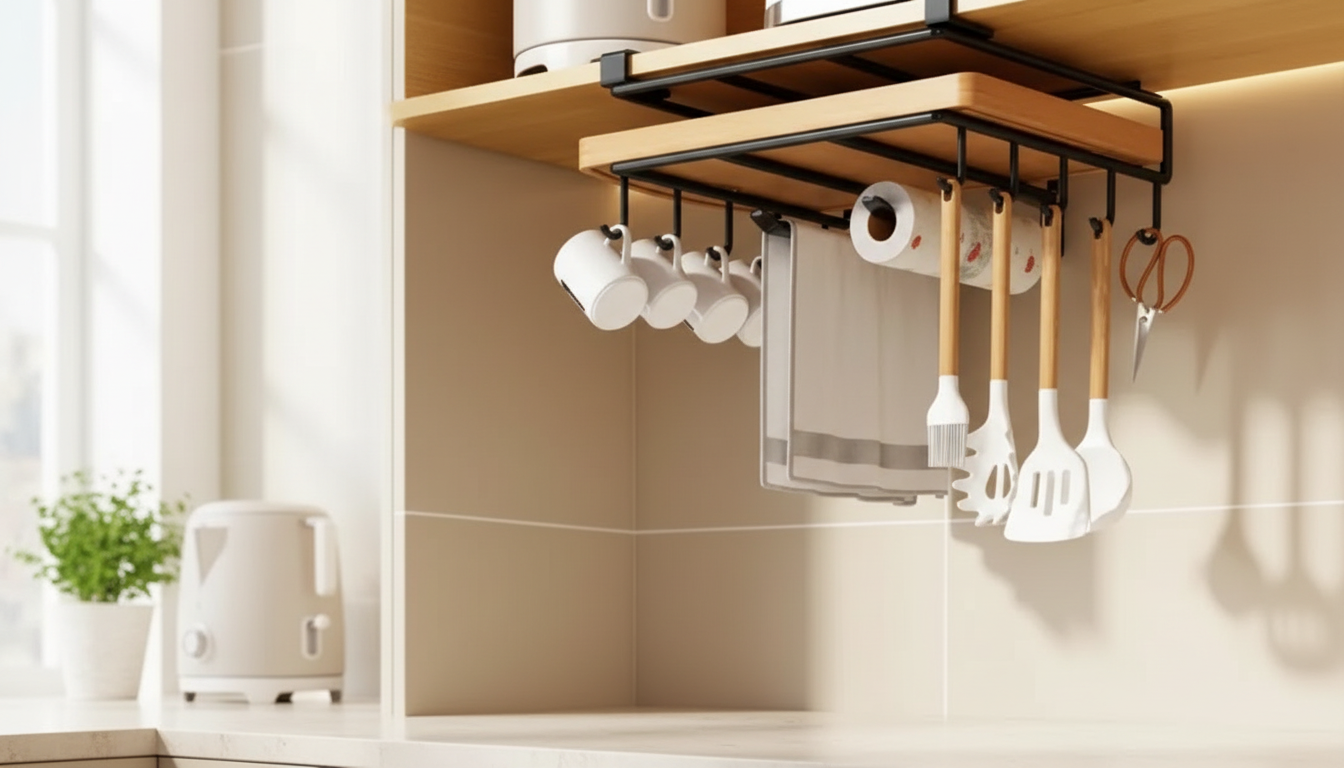
A hanging rack with hooks turns unused vertical space into easy-access storage for utensils, towels, mugs, and small tools. The payoff is immediate: clearer countertops, faster reach-to-grab cooking, and fewer “where did that go?” moments mid-recipe. Below are practical placement ideas, what to hang in each zone, how to install it securely, and simple habits that keep a compact kitchen feeling open instead of crowded.
Most kitchens have the same friction points: the counter becomes a landing pad, drawers turn into tangled tool piles, and towels migrate to oven handles. A hanging organizer rack solves these issues by shifting essentials to a vertical rail where they’re visible and reachable.
For a simple, budget-friendly reset, start with the Kitchen Hanging Organizer Rack with Hooks and reserve it for the tools you reach for every day.
Placement matters more than perfection. The best spot is the one that supports how you actually cook—prep, rinse, sauté, serve—without forcing you to cross the room with wet hands or hot pans.
For cooking safety reminders—especially around open flames and grease—review the guidance from NFPA — Cooking Safety.
If peeling and quick prep are daily tasks, keeping a dedicated tool on the rail (like the Multifunctional Stainless Steel Vegetable & Fruit Peeler) reduces drawer digging and speeds up weeknight cooking.
A compact coffee or tea corner can free up counter space—especially when mugs have a home. If your clearance and rack rating allow, consider hanging a favorite cup like the Japanese Ripple Glass Cup Mug in a dedicated drink zone.
A rack works best when it fits the space and the habit. The goal is easy grab-and-go storage—not a crowded “tool chandelier” that clangs every time you reach in.
| Item type | Typical weight | Recommended placement | Notes |
|---|---|---|---|
| Silicone spatula, ladle | Light | Cook zone or prep zone | Keep a few favorites on display; store extras in a drawer |
| Metal tongs, whisk | Light–medium | Cook zone | Avoid crowding so tools don’t clatter or fall |
| Dish towel, oven mitt | Light | Sink zone or cook zone | Use separate hooks to keep towels from bunching |
| Mugs (if supported) | Medium | Under cabinet or coffee corner | Confirm cabinet clearance and overall load |
| Small baskets/holders (if supported) | Varies | Pantry door or wall | Use only if the rack and mounting are designed for it |
Secure mounting is what makes a hook rack feel “built in” instead of temporary. If the rail flexes or the anchors loosen, items will slide and the setup won’t last.
When choosing cleaning products, consider guidance like EPA — Safer Choice (cleaning products guidance) for a practical starting point.
If you want a noticeable improvement without remodeling, a compact hanging rail is one of the easiest upgrades. The Kitchen Hanging Organizer Rack with Hooks adds vertical storage for utensils and towels and works well in apartments, dorm kitchens, RV setups, and small homes where drawer space is limited.
Yes—use a drill bit designed for tile, drill slowly, and avoid hammer mode until you’re past the glaze. Measure carefully, and when possible, place holes in grout lines and use anchors appropriate for tile.
It depends on the product’s rating and the surface it’s mounted to (studs, drywall with anchors, tile, etc.). Real-world capacity also depends on fasteners and load distribution, so keep heavier items limited and evenly spaced.
Avoid flammable items like paper towels and thin cloths, plus heat-sensitive plastics that can warp. Keep oils, aerosols, and anything that could ignite or melt at a safe distance from burners and high heat.










Leave a comment